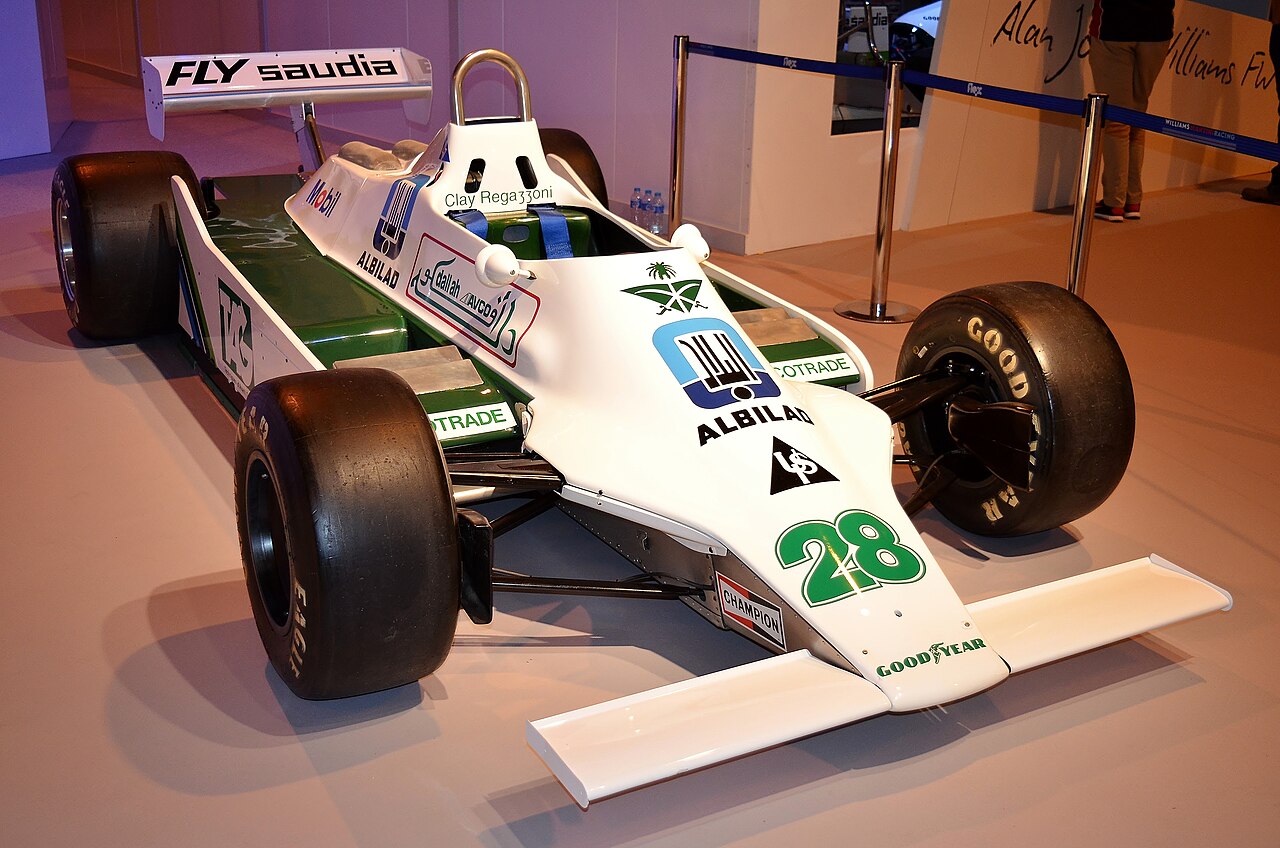
Williams' first Grand Prix win came at Silverstone on 14 July 1979, and the driver who should have taken it was Alan Jones, who died this week aged 80.
It was a day of near misses, a broken water pump and a team-mate in the right place.
A young team finds its car
Frank Williams had restarted his team in 1977 and signed Jones for 1978. The Australian came close to winning that year, but a broken wing at Long Beach and a gearbox failure at Brands Hatch stopped him.
The breakthrough came with the FW07, which made its debut partway through 1979. Jones now had a new team-mate, the experienced Swiss driver Clay Regazzoni.
Before Silverstone, Head and engineer Frank Dernie changed the car to cure some aerodynamic problems. The effect was immediate.
Pole by six tenths
Jones took pole position by 0.6 seconds from Jean-Pierre Jabouille's Renault. It was the first pole for both Jones and Williams.
Nelson Piquet put his Brabham third, with Regazzoni fourth. The Ferraris struggled: championship leader Jody Scheckter qualified 11th and Gilles Villeneuve 13th.
Jones in control, then out
Regazzoni made the better start and led, but Jones and Jabouille both passed him before the end of the first lap.
Jones soon built a commanding lead. Jabouille's Michelin tyres wore quickly, and when he pitted on lap 17 his front wing caught on an air hose left under the car. The repairs ended his hopes and left Regazzoni second.
At half distance, Williams ran first and second. Then, approaching Woodcote at the end of lap 39, Jones's engine overheated because of a failed water pump, and he was out.
Regazzoni brings it home
Regazzoni was left with a big lead. Only three other drivers were still on the same lap: René Arnoux's Renault and the two Ferraris.
The Ferraris faded on worn tyres, and Villeneuve stopped five laps from the end with a fuel problem. Regazzoni even lapped Scheckter on lap 56.
He took the chequered flag 24 seconds ahead of Arnoux, with Jean-Pierre Jarier third for Tyrrell. It was Williams' 25th Grand Prix start and its first win. It was also the fifth and last win of Regazzoni's career.
The race had one more first: it was James Hunt's first Grand Prix commentating alongside Murray Walker on BBC television.
What came next
Jones made up for Silverstone quickly. He won four of the last six races of 1979 and finished third in the championship.
A year later, he won five races and the 1980 world title, the first of seven drivers' crowns for Williams. The team's first win had come from a driver in the right place, but the years that followed were built around Jones.
Race it on Late Brake
Silverstone is one of six real circuits in Late Brake, the free browser game. The layout has changed a lot since 1979, but you can still chase the gold medal time there, and switch to the cockpit camera to see how fast the corners come at you.
Sources: Wikipedia: 1979 British Grand Prix, Wikipedia: Alan Jones), Motorsport.com, BBC Sport